
How to Set Up Multiple Timers Online

Running an event with multiple segments? A meeting with several agenda items? You need more than one timer — and you need them to work together. Here’s how to set up multiple timers online with Stagetimer and run them as a coordinated sequence.
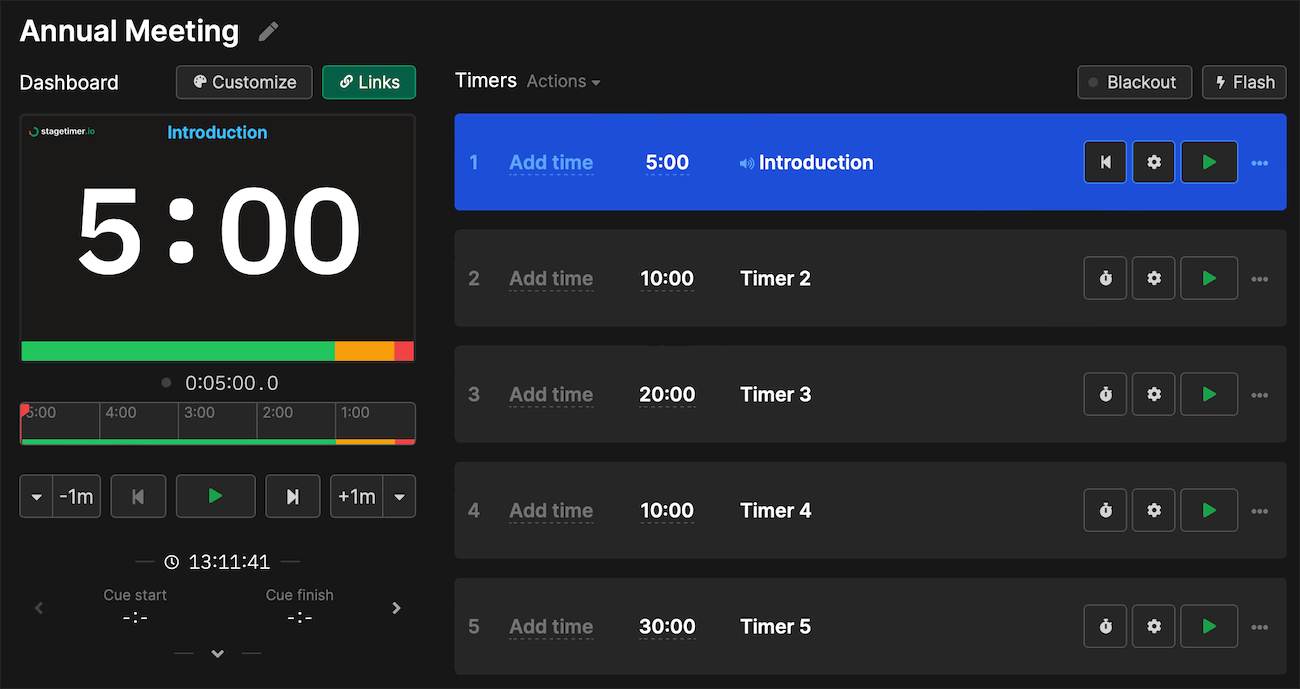
Create your first timer
Start by generating a free room on Stagetimer:
Every room comes with one timer. The free plan lets you add up to three timers. With a Pro or Premium plan, you can add as many as you need.
Add more timers
Click the + Add Timer button below the first timer to add more. Each timer is its own segment — give it a duration, a title, and optionally a speaker name.
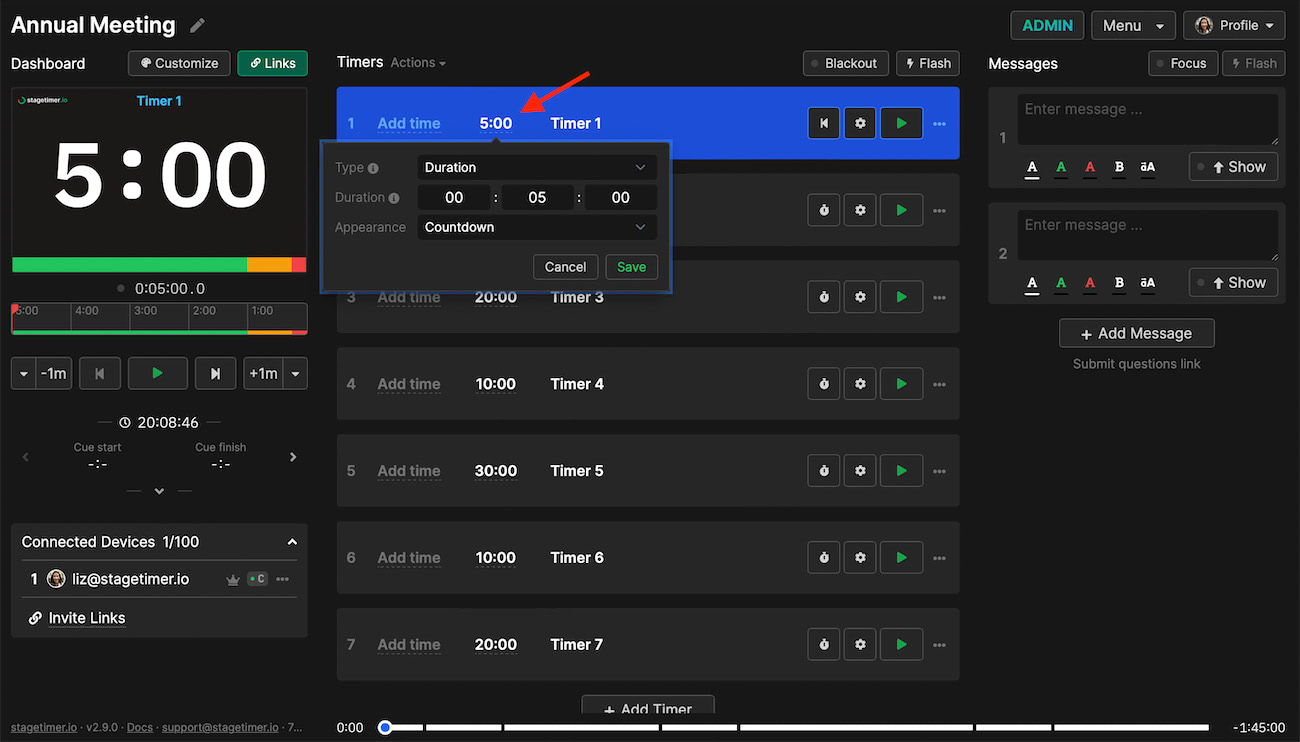
A typical conference setup might look like this:
- Welcome & Intro — 5 minutes
- Keynote — 30 minutes
- Q&A — 10 minutes
- Break — 15 minutes
- Panel Discussion — 45 minutes
Each timer runs independently, so you can start, pause, or skip any segment on the fly.
Share your timers with the team
Once your timers are set up, click Output Links in the top bar and copy the Viewer link. Anyone with this link sees a fullscreen countdown display — perfect for confidence monitors, stage displays, or screen shares.
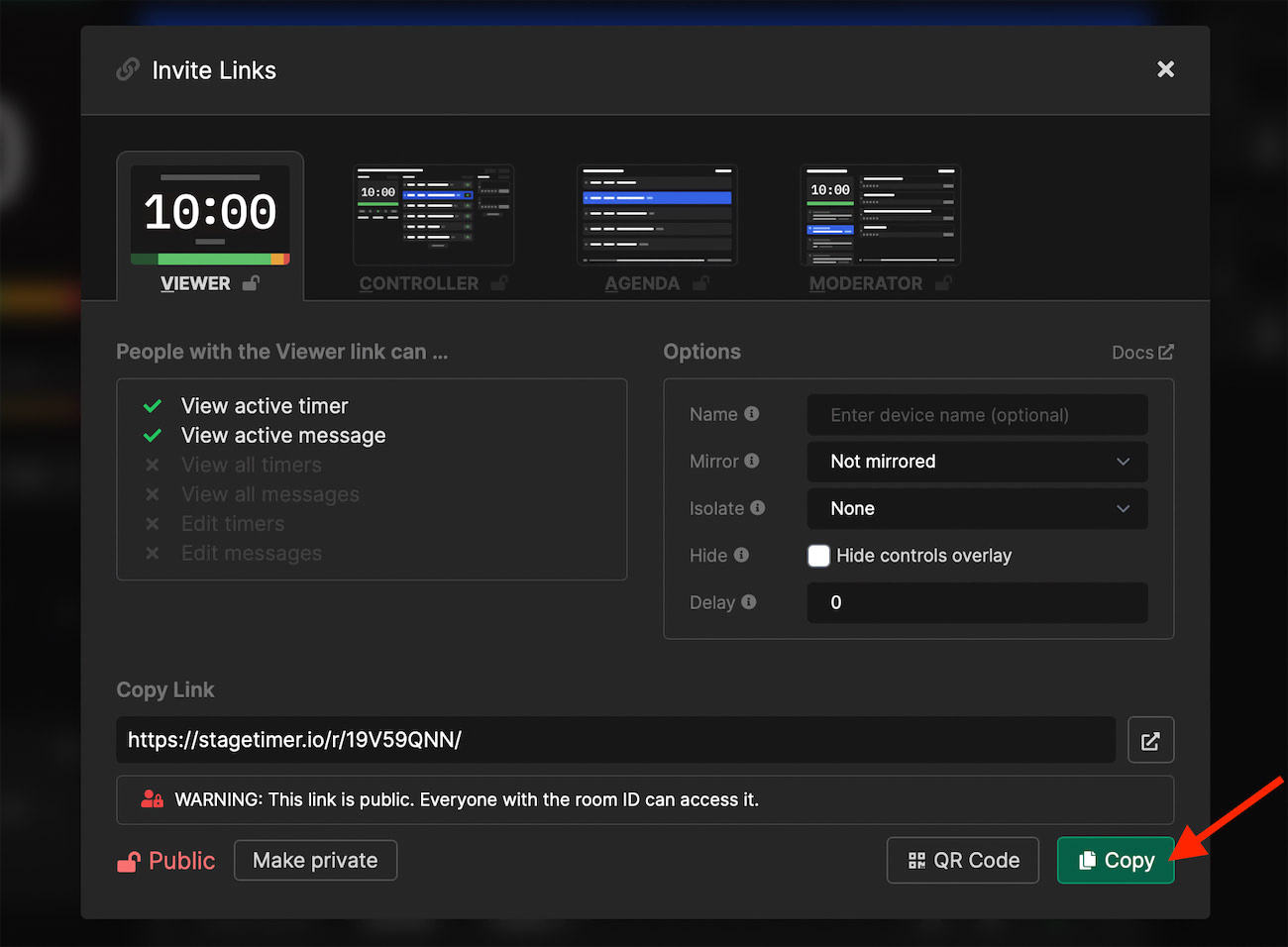
Your entire team sees the same timer. When you switch to the next segment on the controller, the Viewer updates automatically.
Link timers to auto-advance
Want your timers to run one after another without manually pressing play? Click the chain icon between two timers to link them. When the first timer finishes, the next one starts automatically.

This is useful for tightly timed events where every segment flows into the next, like a broadcast rundown or a conference with back-to-back speakers.
Calculate start times automatically
If your event follows a fixed schedule, set a start time on the first timer. Stagetimer calculates all subsequent start times from the durations you’ve set — no manual math required.
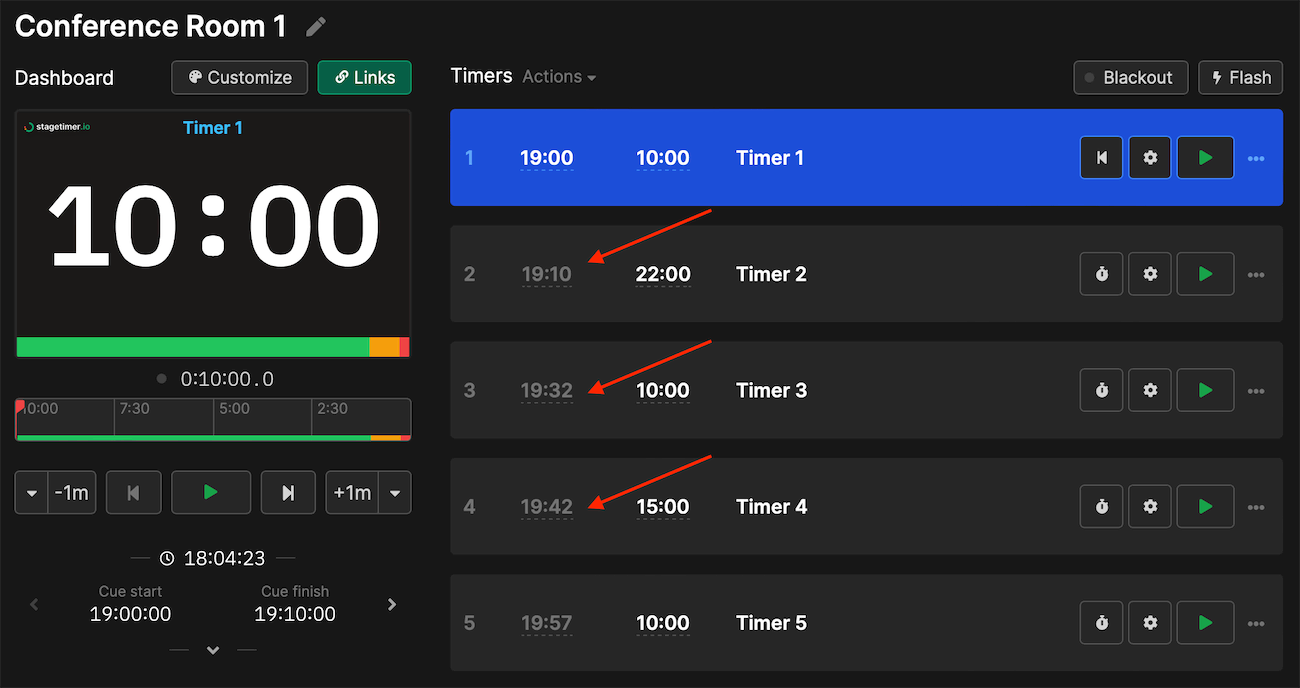
If a segment runs long or short, adjust on the fly. Stagetimer highlights overlaps and gaps so you can see the impact on the rest of your schedule immediately.
Schedule timers to auto-start
Calculated start times still require you to press play. If you need timers to start completely on their own, set the trigger to Scheduled and pick a time. Scheduled timers start automatically at that time — even if you close your browser.
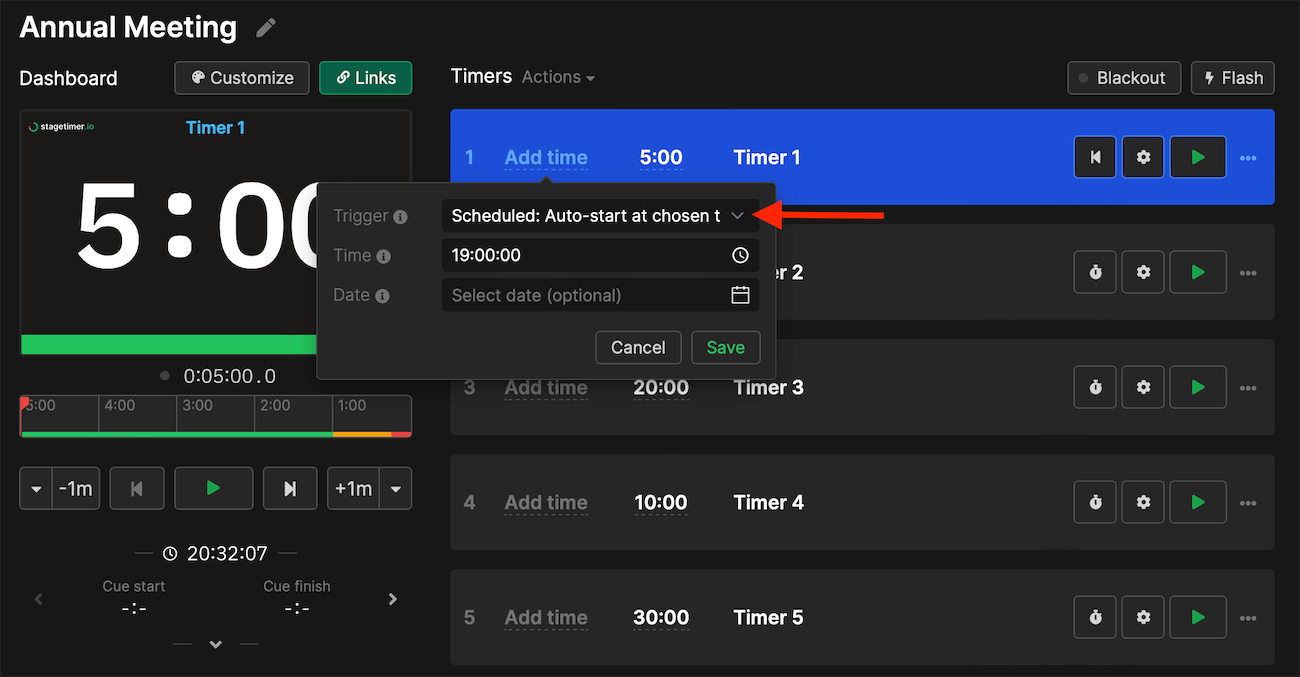
This is useful for recurring meetings, worship services, or any event where you want the countdown running before anyone touches the controller.
Add titles, speakers, and notes
Each timer can carry more than just a duration. Click the edit icon to add:
- Title — what this segment is about (displayed on the Viewer)
- Speaker name — who’s presenting (displayed on the Viewer)
- Notes — internal notes for your crew, visible on the Controller and optionally on the Agenda page
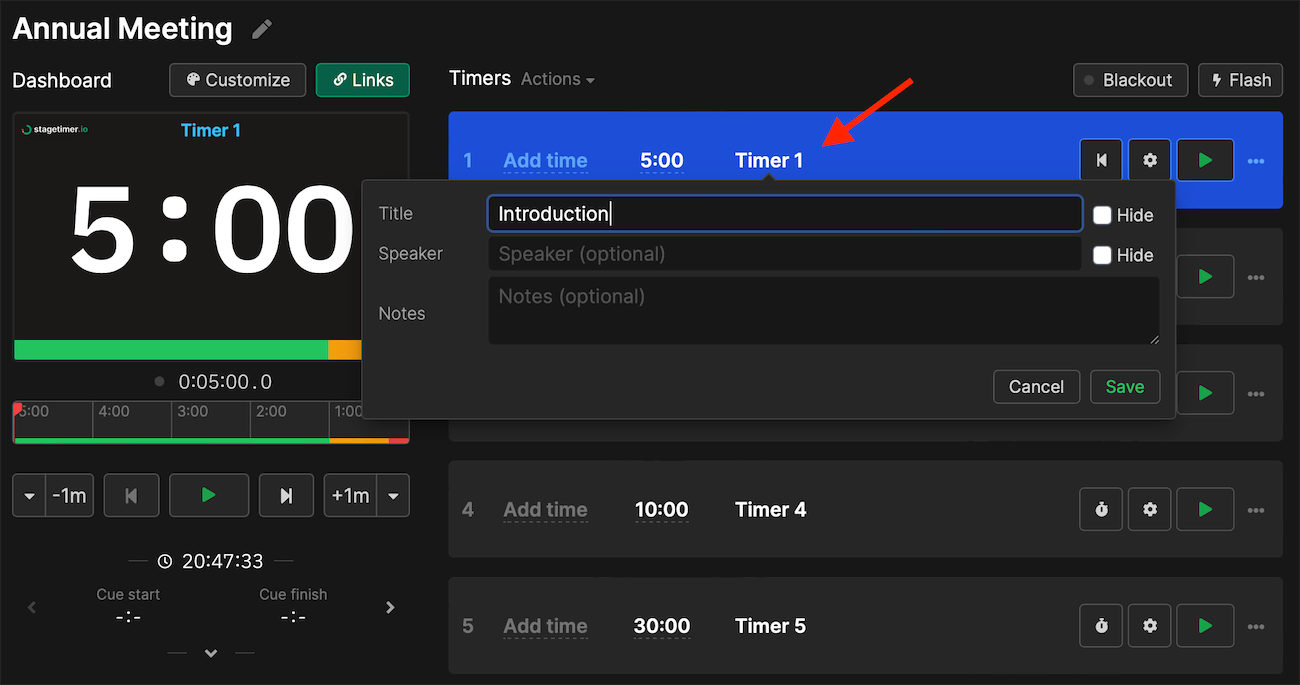
This turns a simple list of timers into a complete event rundown that your entire team can follow.
Common use cases for multiple timers
Conference & event production — Build your full event rundown with timed segments for each speaker, break, and transition. Share the Viewer link with stage managers, speakers, and AV techs.
Meetings — Set timers for each agenda item to keep discussions on track. Everyone sees how much time is left for the current topic.
Workshops & training — Structure timed activities with breaks in between. Link timers so transitions happen smoothly without someone watching the clock.
Live broadcasts — Use scheduled start times and linked timers to run a broadcast rundown that advances automatically. Pair with sound alerts for audio cues.
Ready to try it?
Create a room, add your timers, and share the link with your team. No account required to get started.
For a deeper dive into building complete event rundowns, check out the Event Rundown & Show Flow Guide.